
Influencer marketing works because people trust people more than they trust brands.
When a creator shares a product they actually use, their audience pays attention and often takes action. That’s the core of effective influencer marketing.
Micro-influencer marketing takes that idea and runs with it.
Creators with smaller, focused followings tend to have stronger, more personal relationships with their audience. Because their content feels real, their recommendations feel trusted.
Consequently, their engagement rates often outperform even the largest accounts.
For brands, that means efficient ad spend and high-quality interactions for your brand, making campaign testing simple. Forget buying reach for the sake of reach. You’re tapping right into tight-knit communities that already trust the creator’s voice.
This guide breaks down how to find the right micro-influencers and turn those relationships into measurable results.
Key Takeaways
- Micro-influencer marketing works because smaller creators have tight, trusting communities that take their recommendations seriously.
- Partnering with micro-influencers gives brands a steady stream of authentic user-generated content (UGC) that fills your content pipeline.
- Storytelling typically beats straight product promotion. When creators share a problem and naturally introduce your brand as the solution, engagement and credibility jump.
- Sponsored posts perform best when creators stay in their own voice. Give them a clear angle and not a script.
- Tools like CreatorIQ, Upfluence, and Instagram’s Creator Marketplace make it easier to find micro-influencers whose audiences match your target customer.
What Are Micro-Influencers, and Why Should You Use Them?
Micro-influencers are creators with a smaller but highly focused following, usually between 10,000 and 50,000 followers.
They sit in the sweet spot of influence.
They’re big enough to have reach but small enough to maintain real trust. Their audience knows them in a way that feels personal and believes in their recommendations.
This is where micro-influencer marketing stands apart from traditional social media marketing and celebrity partnerships. Instead of paying for broad visibility, you’re tapping into communities built on genuine connection.
Recent data backs this up. A study from HypeAuditor shows that micro-influencers consistently outperform larger creators in:
- Engagement rate: About four times higher than branded accounts
- Comment quality: More real conversations, fewer bots
- Conversion intent: Followers view them as trusted peers, not spokespeople
Our own data backs up the value of micro-influencers, too.
In NP Digital’s analysis of 2,808 influencer campaigns, micro-influencers delivered the highest return on investment (ROI) of any tier, even though this dataset defines “micro” more broadly (1,000–100,000 followers).
The pattern is the same: Smaller, more connected creators are more than capable of outperforming larger accounts.
With micro-influencers, you’re not buying reach for vanity metrics. You’re investing in creators whose audiences take action.
Micro-influencers also bring niche expertise.
Be it fitness, skincare, gaming, parenting, or finance, they understand their community’s pain points and how to speak to them. That makes your partnership feel organic.
If you’re looking to build brand trust or reach niche audiences, micro-influencer marketing might be a better fit than chasing accounts with millions of followers.
How to Find Micro-Influencers for Your Brand
Finding the right micro-influencer matters as much as the content they create.
You’re looking for creators whose audience matches your own. That means demographics, interests, tone, and the problems they help people solve.
Where to begin?
It starts with understanding your customer. Once you know who you’re trying to reach, you can identify creators who already have their attention.
Thankfully, there are several reliable platforms that turn influencer hunting into a science:
- All-in-one powerhouses: Tools like Aspire, Upfluence, and CreatorIQ act as powerful search engines. They let you filter creators by niche, location, follower range, engagement rate, and detailed audience demographics.
- Platform-specific: Don’t forget Instagram’s own Creator Marketplace. It’s especially valuable for campaigns tied to Reels or broader Instagram marketing efforts.
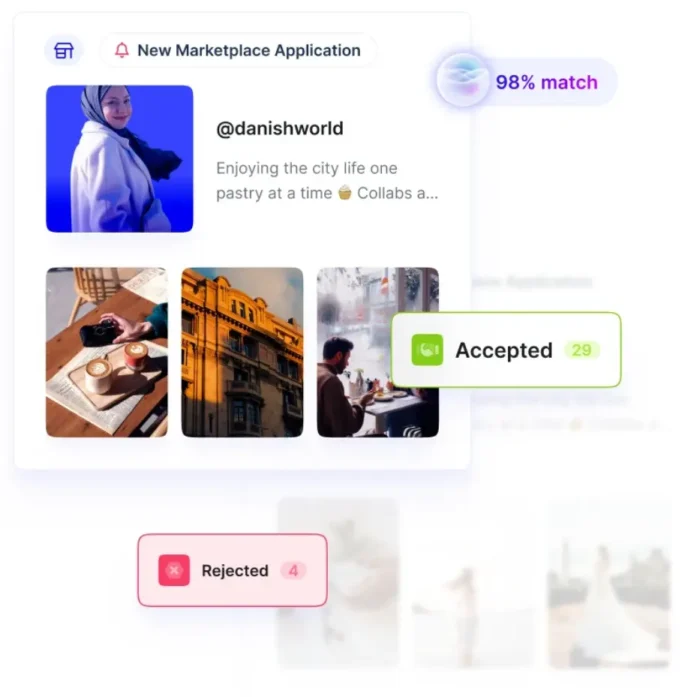
Upfluence streamlines the vetting process by showing how closely a creator matches your campaign criteria and letting you accept or reject applicants with a single click.
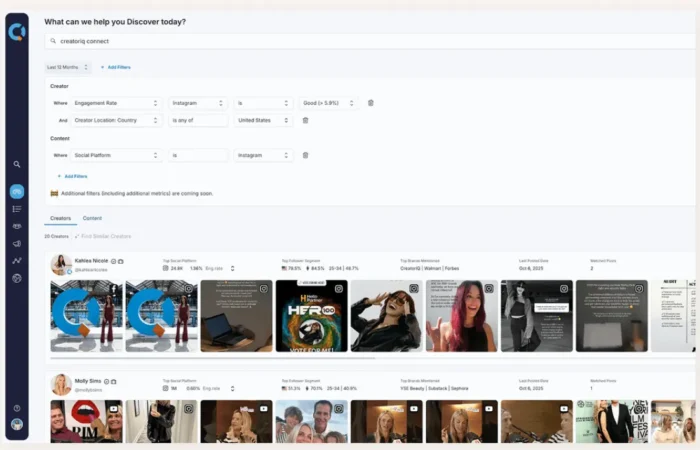
CreatorIQ makes discovery simple by letting you filter creators by platform, engagement rate, audience demographics, and content style so you can quickly spot micro-influencers who actually fit your brand.
If your audience spends time on multiple platforms, like YouTube Shorts or TikTok, try cross-platform tools like HypeAuditor or Influence.co. They let you compare creators across channels and keep your campaigns consistent. (If TikTok is part of your plan, here’s a deeper dive into TikTok marketing.)
When evaluating micro-influencers, look at more than follower count. Keep these metrics in mind, too:
- Engagement quality: Comments, saves, and shares
- Audience relevance: Do their followers match your target?
- Content style: Does it align with your brand’s tone and values?
- Consistency: Active creators deliver stronger results
After narrowing your list, reach out with a clear pitch. Be sure to leave space for creative freedom. Micro-influencer marketing works best when they can speak to their audience in their own authentic voice.
How Micro-Influencers Can Help Power Your Marketing Campaigns
Micro-influencers shine when you plug them into real campaigns vs. one-off posts. They do the heavy lifting, sparking awareness and directly driving product demand, keeping your brand in front of the right people. Their audiences trust them, and that trust moves fast.
The next sections break down how to use that momentum.
1. Use Campaign-Specific Hashtags
Campaign-specific hashtags make it easy for micro-influencers and their audiences to rally around your brand. They give you a single thread that connects posts and user-generated content (UGC) in one place.
Start by creating a hashtag that’s simple and tied to a clear idea, not just your brand name. Then invite a group of micro-influencers to use it in their posts, Reels, and Stories as they share your product in real-life settings.
A branded hashtag can work when real people actually use it, though.
LaCroix’s #livelacroix tag is a great example. Search it on Instagram or TikTok, and you’ll see the same pattern play out over and over again: micro-influencers showing how the product fits naturally into their routines.
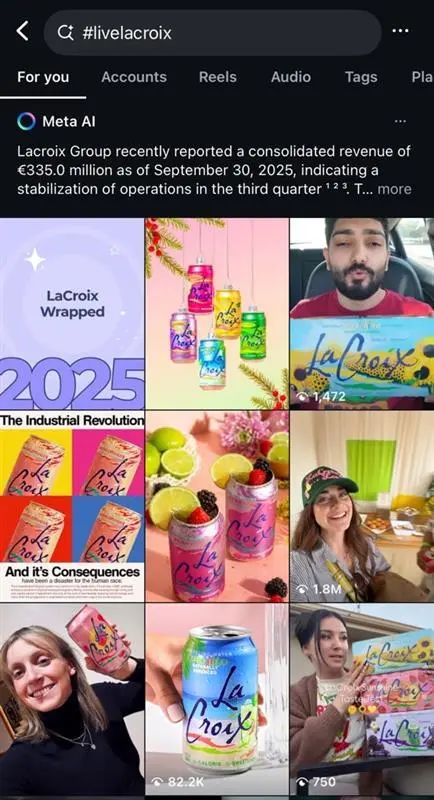
On Instagram (above), the tag pulls up everything from fridge restocks to quick taste tests in the car.
These aren’t creators with crazy big audiences, but their engagement is strong because the posts feel personal.
Even better, the hashtag travels across platforms. Here’s what it looks like on TikTok.
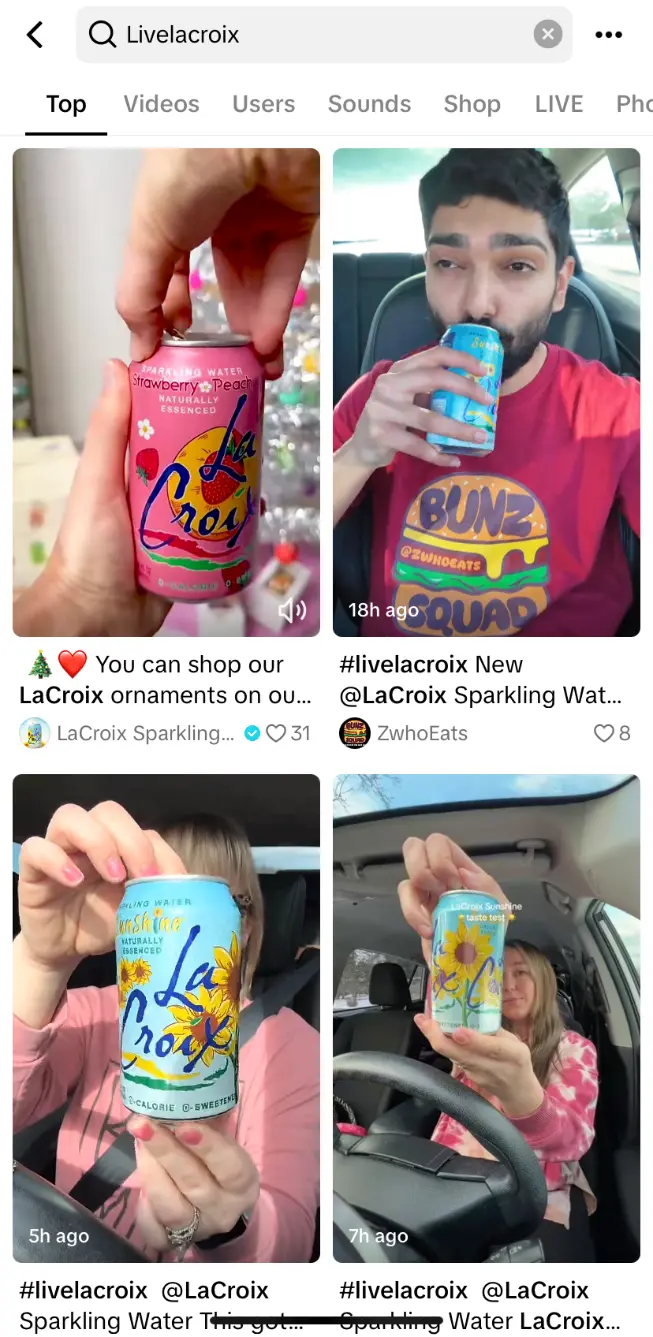
Among those showing up in the grid is local food creator @zwhoeats (19,000 followers), who posts casual reviews and flavor rankings using the same tag. His videos pull in thousands of views because his audience trusts his take on everyday products.
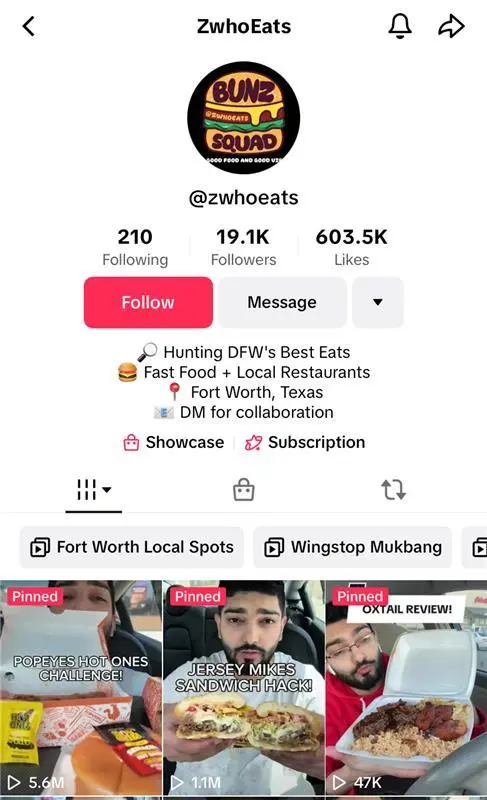
This is the real power of a campaign-specific hashtag.
It gives micro-influencers a simple way to plug your brand into content they’re already making. And from it grows a discoverable trail of posts you can reshare and build upon.
2. Leverage User-Generated Content
User-generated content may be the “ace in the hole” for your next micro-influencer campaign.
Rather than rely only on polished brand assets, you show real people using your product in real situations. And that’s what convinces others to try it.
Micro-influencers are perfect UGC engines. They already create content that their followers trust, so you tap into a steady stream of authentic content when you partner with them.
A great example comes from I and Love and You, the pet food brand. Its open Influencer Ambassador Program is built specifically for micro-influencers—everyday pet owners and small creators who share honest moments with their pets.
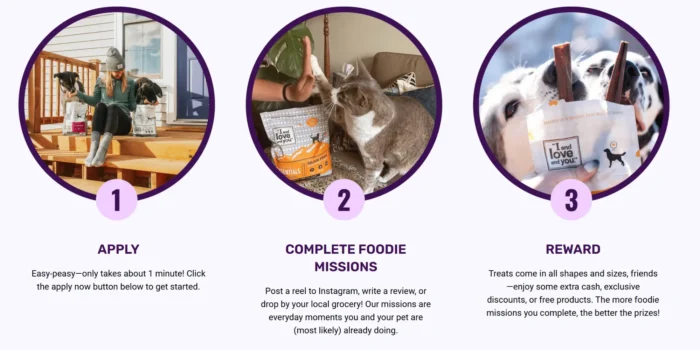
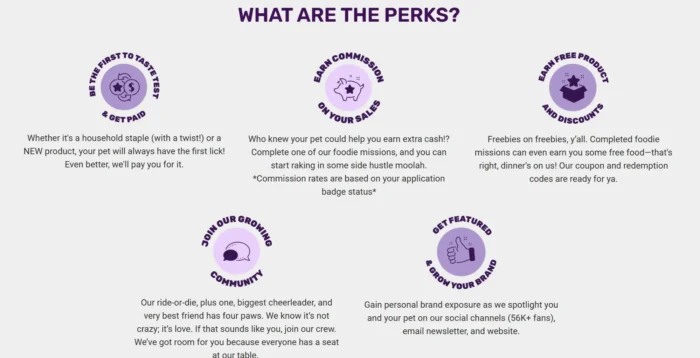
Through this program, the brand activated hundreds of micro-influencers, generating countless posts and impressions.
The content all looks and feels like real life, because it is. There aren’t any studio shoots, no forced scripts. As you can see from the Instagram grid below, it’s just UGC created by people their audience already trusts.
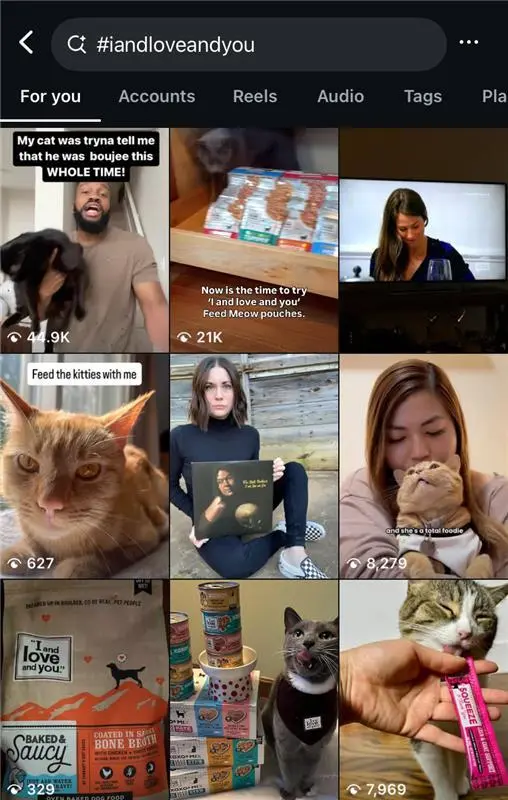
This is the playbook. Collaborate with micro-influencers who already share the kind of content your customers want to see, let them create in their own style, and then amplify the best pieces.
UGC not only builds social proof but fills your content pipeline with assets that outperform polished brand creative.
3. Create Sponsored Posts
Sponsored posts work well with micro-influencers because their audiences already trust them.
The key is letting creators build content that fits their tone and the way their audience naturally engages.
Take this Candy Cloud example from TikTok.
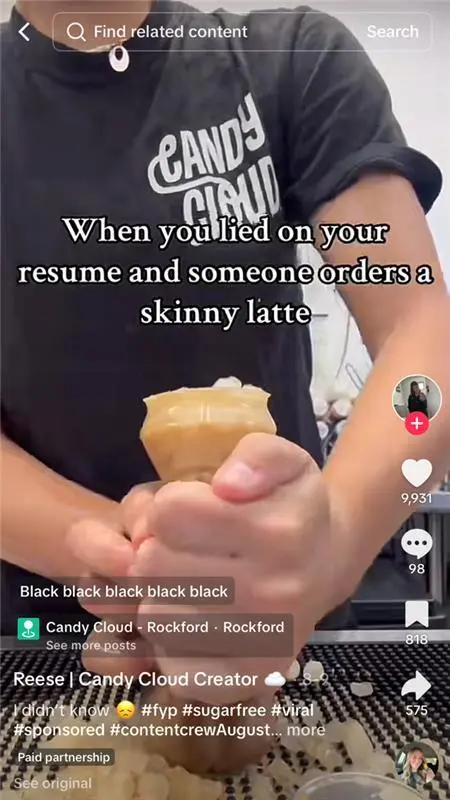
Instead of a polished product shot, the creator filmed a chaotic behind-the-counter moment with a joke about messing up a “skinny latte.” It’s tagged as a paid partnership, but the vibe is unmistakably them.
That’s the lesson: Sponsored posts feel credible when they look like the creator’s regular content.
Give micro-influencers room to shoot in their own style and let the authenticity do the heavy lifting.
When you do that, sponsored posts feel like genuine recommendations instead of ads competing for attention.
4. Tell a Story With Your Promotion
Storytelling is where micro-influencer marketing really shines.
Facts and features are forgettable. Stories, though? They stick.
When creators show why a product fits into their life (not just what it is), people pay attention.
I learned this firsthand years ago when I was growing my blog. My posts were solid, but traffic wasn’t moving. Once I started weaving in small stories—real struggles, lessons, wins—engagement spiked and readers stayed longer.
The content didn’t change much. But the connection did.
The same principle applies to micro-influencer marketing campaigns. Instead of asking for a straight product shot, encourage creators to wrap your brand into a moment that feels true to them.
Maybe it’s a “day in the life,” a behind-the-scenes routine, a quick before-and-after, or a personal challenge they’re solving.
For example, the TikTok post below works because the creator, @bianca.montalvo, sets up a relatable travel problem—pricy roaming fees. She then folds Airalo, an eSIM platform, in as the natural solution, turning her tip into a simple, effective story her audience can follow.
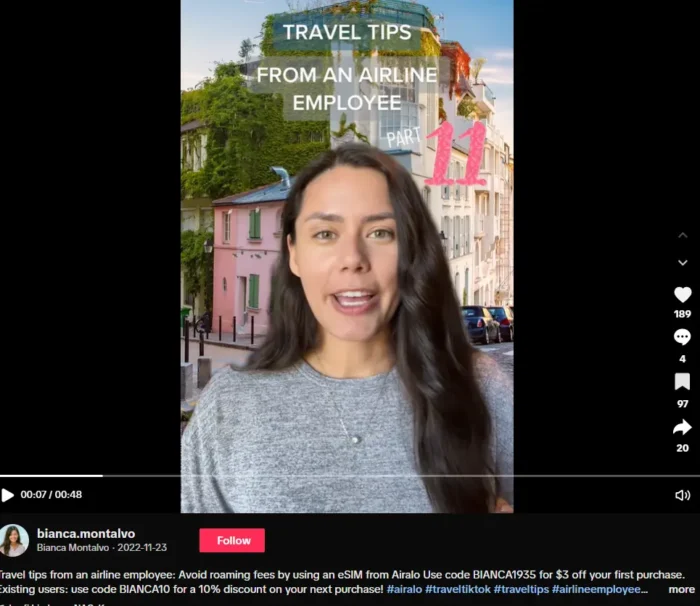
These are chapters from the creator’s life where your product naturally fits. And because micro-influencers are already tight with their followers, that story feels authentic.
How to Track Influencer Campaigns
Tracking your influencer marketing campaigns isn’t complicated once you know what to look for.
Start by measuring performance on the platform itself. Instagram’s Insights, TikTok’s Analytics, and YouTube’s Creator Studio all show reach, engagement, audience demographics, and which posts actually drove action.
These numbers help you understand which creators and formats are worth repeating.
For deeper reporting, some of the platforms we mentioned earlier—Aspire, Upfluence, and CreatorIQ—let you track creators, pull in content automatically, monitor hashtag performance, and calculate cost per engagement or cost per acquisition across campaigns.
If you’re running a mix of organic and paid micro-influencer content, these tools give you one place to compare everything.
You should also tag your links with UTM parameters so you can see traffic and conversions inside Google Analytics.
The goal is to track the pieces that show real impact: saves, shares, comments, website clicks, and sales. That way, you know exactly which micro-influencers are moving the needle and where to invest next.
FAQs
What is a micro-influencer?
A micro-influencer is a creator with roughly 10,000 to 50,000 followers (though it’s sometimes defined as 10,000–100,000 or in other ranges). These creators tend to have highly focused, highly engaged audiences. They’re big enough to create impact but small enough to maintain real trust with their community.
Does micro-influencer marketing work?
Yes. Micro-influencers often outperform larger creators in engagement, conversions, and cost efficiency. Their followers view them as peers, which leads to stronger recommendations and higher intent.
Where to find micro-influencers?
You can find micro-influencers through platforms like Aspire, Upfluence, and Instagram’s own Creator Marketplace. If your audience is active across platforms, tools like HypeAuditor can help you compare creators on Instagram, TikTok, and YouTube.
{
“@context”: “https://schema.org”,
“@type”: “FAQPage”,
“mainEntity”: [
{
“@type”: “Question”,
“name”: “What is a micro-influencer?”,
“acceptedAnswer”: {
“@type”: “Answer”,
“text”: “
A micro-influencer is a creator with roughly 10,000 to 50,000 followers (though it’s sometimes defined as 10,000–100,000 or in other ranges). These creators tend to have highly focused, highly engaged audiences. They’re big enough to create impact but small enough to maintain real trust with their community.
”
}
}
, {
“@type”: “Question”,
“name”: “Does micro-influencer marketing work?”,
“acceptedAnswer”: {
“@type”: “Answer”,
“text”: “
Yes. Micro-influencers often outperform larger creators in engagement, conversions, and cost efficiency. Their followers view them as peers, which leads to stronger recommendations and higher intent.
”
}
}
, {
“@type”: “Question”,
“name”: “Where to find micro-influencers?”,
“acceptedAnswer”: {
“@type”: “Answer”,
“text”: “
You can find micro-influencers through platforms like Aspire, Upfluence, and Instagram’s own Creator Marketplace. If your audience is active across platforms, tools like HypeAuditor can help you compare creators on Instagram, TikTok, and YouTube.
”
}
}
]
}
Conclusion
Driving more sales and landing more customers is a grind.
That’s especially true in today’s world, where every niche and subset of that niche has a competitor.
There are countless businesses, just like mine and just like yours.
Investing in micro-influencer marketing can be a way to stand out. They get your brand in front of people who actually care.
Their audiences know them and pay attention when they recommend something.
Start small. Build a list of creators who already speak to your target customer.
Look for strong engagement and content that aligns with your brand. Then plug them into your broader influencer marketing strategy. UGC, sponsored posts, campaign hashtags, and simple storytelling all work well at the micro level.
If you stay consistent and treat these creators like true partners, you’ll see the impact quickly.